


How to Find an Estate Planning Attorney
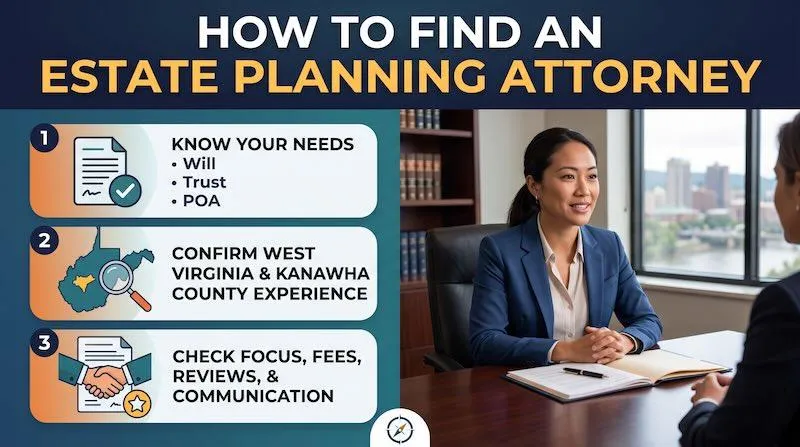
Quick answer: Choose a licensed West Virginia attorney who focuses on wills, trusts, and powers of attorney. Confirm they know Kanawha County's court procedures. Look into their reviews online. Ask about fees, experience, and communication style upfront. Schedule a consultation before committing.
Here's how to find an estate planning attorney, step by step.
1. Know What You Need First
Figure out which documents you actually need before you start searching:
A last will and testament (designates who will be a guardian to your minor children, and where your assets will go)
A revocable or irrevocable trust (both bypass probate court, and determine who will inherit your assets, and when)
A medical or durable power of attorney (a medical POA designates who will make medical decisions on your behalf if you cannot, and a durable POA designates who will handle financial and legal matters if you cannot)
Guidance on transferring a home, land, or mineral rights to the next generation
Planning for a family member with special needs
If you already know you need a trust, ask specifically about the attorney's trust work. Some attorneys mainly handle simple wills; others regularly draft more complex trust arrangements. Being very specific about your situation early saves time and gets you a better fit faster.
2. Confirm West Virginia Experience
Estate planning law varies a lot by state, actually. West Virginia has its own rules for how wills must be signed and witnessed, how it works when someone dies without a will, and how deeds are recorded at the county level. An attorney who practices regularly in West Virginia, ideally in Kanawha County, already knows these requirements and won't need to research them for your case.
This matters even more if your estate includes land passed down through a family or mineral rights, both common in this region. An attorney unfamiliar with them may miss details a local attorney would catch immediately.
3. Check These Four Things
Focus area. Estate planning is a distinct practice area. An attorney splitting time across other types of law may not stay current on it the way a dedicated estate planning attorney does.
Clear communication. Notice whether the attorney explains legal concepts in plain language or leans on jargon without clarifying it. You should leave a conversation with more clarity, not less.
Straightforward fees. Ask how they bill, flat fee for a will or trust package versus hourly for more involved matters. A trustworthy attorney explains this before you commit to anything.
Reviews and reputation. Look for client feedback online or ask for references. Estate planning is personal, and hearing how an attorney has worked with other families tells you a lot.
4. Ask These Questions During a Consultation
How much of your practice is focused on estate planning?
Have you worked with situations like mine, such as a family business, land, or mineral rights?
How do you charge for a will, trust, or power of attorney?
How often should I expect to update my documents?
Who handles my questions if something changes after the documents are signed?
Pay attention to how the conversation feels, not just the answers. You'll be sharing personal financial and family details with this person, so trust matters as much as credentials.
5. Factor In Charleston and Kanawha County Specifics
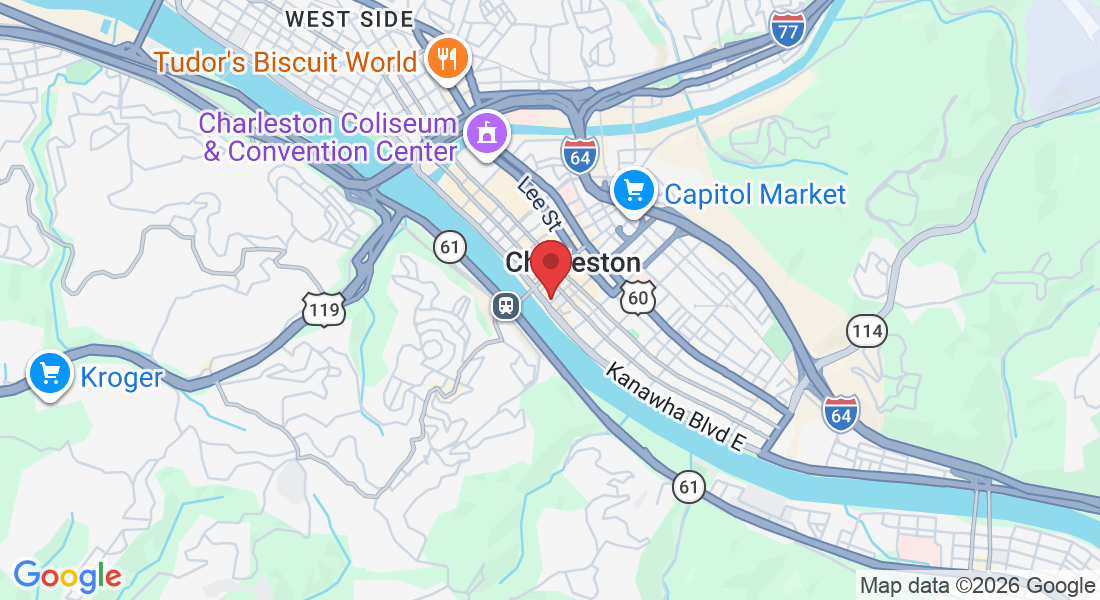
Estate planning documents sometimes need to be filed or recorded with the Kanawha County Circuit Clerk, and a local attorney already knows that process. Many Charleston-area families are also planning around long-held property near the East End or land that's been in the family for generations, and a local attorney understands that context without extra explanation.
6. Don't Wait to Start
The most common mistake isn't choosing the wrong attorney; it's waiting too long to start at all. These documents only work if they're in place before they're needed. Once you've found an attorney you trust, moving forward sooner means your family won't be left without guidance during an already difficult time.
Frequently Asked Questions
How do I know if I need an estate planning attorney or if I can use an online template?
Templates work for very simple situations, but they don't account for state-specific requirements or unique family circumstances, such as land, mineral rights, or a beneficiary with special needs. An attorney also catches mistakes templates commonly miss, like improper witnessing or signing requirements under West Virginia law.
What should I bring to a first meeting with an estate planning attorney?
A general list of your assets, who you'd want to inherit them or make decisions on your behalf, and any existing estate documents you already have. You don't need everything finalized beforehand.
How much does it cost to hire an estate planning attorney?
Costs vary depending on whether you need a simple will or a more involved trust arrangement. Many attorneys offer flat fees for standard documents, so ask about pricing during your initial consultation.
Can one attorney handle my will, trust, and power of attorney together?
Yes, most estate planning attorneys handle these documents as a package, since they often work together as part of a complete plan.
How often should I update my estate plan once it's in place?
Review your documents every few years, or sooner after a major life event such as a marriage, divorce, birth, death, or significant change in assets.
Conclusion
Finding the right estate planning attorney comes down to a handful of practical checks: confirm they focus on estate planning, that they know West Virginia and Kanawha County law, and that they communicate clearly about fees and process. A short consultation will usually tell you everything else you need to know, including whether you're comfortable enough to hand over the personal details this kind of planning requires.
Once you've found that fit, the next step is simple: start. The value of an estate plan comes from having it in place before it's needed, not from how long you spent deciding.