AGGRESSIVE REPRESENTATION
At Chris Pritt Law, we provide quality legal services in a wide variety of practice areas. These include:

Divorce

Child Custody

Child Support

Paternity
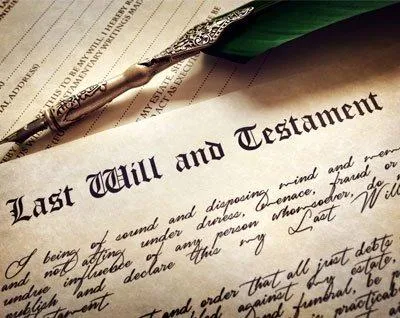
Wills & Trusts

Adoptions

Medical Powers of Attorney

Qualified Domestic Relations Orders

Estate Disputes

Prenuptial Agreements

Durable Powers of Attorney

Property Deeds
“I would like to express my heartfelt gratitude to you for all the care and concern you have shown me, and for working tirelessly to ensure that the law worked in our favor."
EM. G


Estate planning attorney Serving
Charleston, west virginia
Estate Planning Doesn't Need To Be A Nightmare

Pritt Law helps Charleston and West Virginia families put a legally sound estate plan in place — one that decides who receives your assets, who's authorized to make decisions on your behalf if you're incapacitated, and how your wishes are carried out, rather than leaving those questions to a court.
Whether you're starting from scratch or updating documents that no longer reflect your life — a marriage, a divorce, a new child, a change in assets — Pritt Law works with you to identify which documents apply to your situation and drafts each one to function as intended under West Virginia law.
Our Estate Planning Services
Every estate plan is different, but most are built using a core set of tools as a basis designed to protect you and your family.
A will serves as the foundation of many estate plans. It outlines how your property should be distributed and allows you to name guardians for minor children—one of the most important decisions parents can make. It’s simple, cheap, easy, and effective.
Trusts can help avoid probate (an expensive and drawn-out court process), ensure your information stays private, and give you more control over how and when assets are distributed.
These documents give you control over future medical decisions. A healthcare power of attorney allows someone you trust to communicate with doctors and make medical choices on your behalf if you cannot speak for yourself. Advance directives allow you to outline your preferences for treatment and end-of-life care.
A durable power of attorney allows you to appoint someone you trust to handle financial matters if you become unable to do so yourself. This can include paying bills, managing bank accounts, handling investments, or dealing with property issues. Without this document in place, your family may need court approval to step in.
For over 17 years, we’ve helped individuals and families in Charleston develop estate plans ranging from simple to highly customized, always personalized to their real-life needs.
How An Estate Plan Protects Your Family and Legacy
Your legacy isn't just what you leave behind — it's the security, clarity, and care you provide for the people who matter most. A well-built estate plan protects that legacy in ways a single document never could.
Your assets go to the people you choose, not whoever the state picks
Without a plan, West Virginia's intestacy laws step in and decide who inherits — and that order is fixed by statute, not by what you'd actually want. Spouses, children, and other relatives are prioritized in a specific sequence that may leave out a partner you weren't married to, a stepchild you raised, or a friend who was practically family. A will or trust lets you name exactly who gets what, down to specific assets, timing, and conditions, instead of leaving it to a formula.
Someone you trust makes decisions for you, not a judge you've never met
If you become incapacitated without a power of attorney or medical directive in place, your family can't simply step in — they have to petition the court for guardianship or conservatorship, a process that costs time and money and puts the decision in a judge's hands. With those documents already signed, the person you chose can act immediately, without court involvement, exactly when your family needs speed the most.
Your family spends less time in probate court or avoids it entirely
Even with a will, your estate still goes through probate — but a well-drafted plan makes that process faster, clearer, and less likely to hit snags like missing paperwork or unclear asset ownership. If minimizing court involvement matters to you, a revocable living trust can move most assets outside of probate entirely, letting your family access what they need without waiting on the court's calendar.
The Chris Pritt Law Difference

Our process is built around clarity and knowledge. With nearly 18 years of experience in estate planning, we know it like the back of our hand, and as Charleston natives, we take the local courts and laws into account in every plan we help create.
We start with a focused planning conversation designed to help you understand:
What would happen under your current situation
Where risks or gaps may exist
What options make the most sense for your goals
We’ll then work together to promptly develop a plan that protects you now and into the future. No templates. No generic plans. Just careful planning backed by experience.
What Happens If You Don’t Have an Estate Plan?
An estate plan covers two different situations: what happens while you're alive but unable to make decisions, and what happens to your assets after you die. Without a power of attorney or medical directive, no one has legal authority to act for you if you're incapacitated. And without a will or trust, West Virginia's intestacy law decides who inherits your property, following a fixed order of priority set by statute rather than your actual wishes.
Without a power of attorney, a court decides who manages your affairs
A power of attorney and a medical directive authorize someone you choose to act on your behalf if you become incapacitated. Without them, no one automatically has that authority — including a spouse. Instead, family members must petition the court for guardianship (over your person) or conservatorship (over your finances). The court reviews the petition, may require a hearing, and appoints someone to serve in that role. The appointed person answers to the court, not to you, and is required to file periodic reports on the decisions they make.
Without a plan, your financial and family details become part of the public record
Probate is filed with the county court and is a matter of public record. The filing typically includes an inventory of your assets, a list of debts and creditors, and the names of beneficiaries and what they receive. Once filed, this information is accessible to anyone who requests the file, not just parties involved in the estate.
Without documented authority, your family can't access funds or make decisions on your behalf
Financial institutions and healthcare providers require legal authorization before releasing funds or information to anyone other than the account holder or patient. Without a power of attorney, medical directive, or court order, family members cannot pay bills from your accounts, manage investments, or make medical decisions on your behalf. Obtaining that authority through the court, if needed, adds a formal filing and review process before anyone can act.
Without a documented plan, disputes over your assets or care are more likely to end up in court
When there's no written record of your intentions, disagreements among family members about asset distribution, guardianship, or medical decisions have no documented standard to resolve against. These disputes can be formalized as will contests, guardianship challenges, or other probate litigation, which extends the timeline and cost of settling the estate.
Frequently Asked Questions
Do I really need an estate plan if my estate is small?
Yes. Estate planning isn’t just about wealth—it’s about control. Even modest estates benefit from clear instructions for asset distribution, medical decision-making, and financial authority if something unexpected happens. Without a plan, West Virginia law decides these issues for you.
What happens if I pass away without an estate plan in West Virginia?
If there’s no estate plan in place, the court will take your case under probate to determine who receives your assets and who manages them. This process can be time-consuming, public, and may not reflect what you would have wanted for your family.
Can estate planning help if I become incapacitated but don’t pass away?
Absolutely. Proper planning allows people you personally trust to manage your finances and make healthcare decisions if you’re unable to do so yourself. Without these documents, your family may need court approval to have any kind of say over what happens to you.
What’s the difference between naming someone in a will versus naming them as a beneficiary?
A will controls assets that pass through probate, while beneficiary designations control assets that transfer directly, such as retirement accounts or life insurance.
Can’t I just do this online?
Online forms may seem convenient, but they rely on generic templates and assumptions. They don’t account for personal circumstances or West Virginia-specific rules. Any sort of small mistake can turn into a huge consequence later on.
Helpful Estate Planning Articles
How to Protect Your Great Ideas or Works for Your Family
Protect your intellectual property for generations. Learn how copyrights, patents, trademarks, and royalties can be incorporated into your estate plan. ...more
Estate Planning
October 09, 2026•6 min read

Types of Life Insurance and How They Can Be Used in Estate Planning
Term, whole, universal, variable, survivorship — life insurance isn't one-size-fits-all. Here's how each type works and where they fit in an estate plan. ...more
Estate Planning
October 09, 2026•5 min read

When “We’ll Figure It Out” Becomes a Problem
When a health crisis hits, "we'll figure it out" isn't a plan. Learn why families need powers of attorney and clear roles before disaster strikes. ...more
Estate Planning
October 02, 2026•4 min read

Get In Touch With Pritt Law Today
Set up the right protection now, and the home, land, and savings you've spent a lifetime building stay with the people you intend to have them. Wait until a claim is filed, and the law may not let you fix it. Chris Pritt Law is located in downtown Charleston, a short walk from the Kanawha County Courthouse, serving families throughout Kanawha, Putnam, Lincoln, and Boone counties. The earlier you bring in an asset protection attorney, the more options remain to protect what's yours.
If you're ready to protect what you've built, contact Chris Pritt Law to schedule a consultation.
1012 Kanawha Blvd E 5th Floor
Charleston, West Virginia, 25301
Phone: (304) 720‐4412
Email: [email protected]
OFFICE HOURS
Monday-Friday: 9:00am – 5:00pm
Saturday & Sunday: Closed
Company Info
FOLLOW US ON
